
Standing desks have become a go-to solution for better posture, less sitting, and sharper focus throughout the day. But with so many models on the market, knowing which one to pick can be overwhelming. This guide walks you through the key things to look for when choosing a standing desk that fits your needs, your space, and the way you work.
Why picking the right standing desk matters
The wrong desk can cause pain, poor posture, and daily frustration. The right one, on the other hand, can genuinely improve your comfort, productivity, and motivation. Done right, it’s one of the best investments you can make for your workspace.
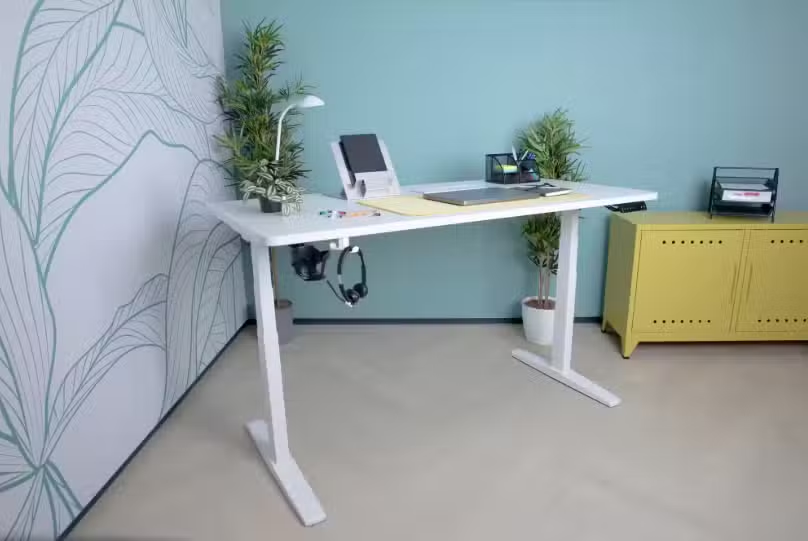
What to look for
1. Height range
Make sure the desk covers both your sitting and standing heights. For someone around 5’9″ (1.75 m), a range of 65 to 125 cm (roughly 25″ to 49″) works well.
2. Lifting mechanism: electric or manual
- Electric: smooth, quiet, and great for frequent daily use. Many models let you save your preferred heights.
- Manual (crank): more affordable and no power needed, but slower to adjust and more effort to use. Generally less durable long-term.
3. Stability and weight capacity
Check the maximum load, especially if you’re running multiple monitors or heavy gear. Aim for 100–150 kg (220–330 lbs) capacity. A solid steel frame and non-slip feet go a long way.
4. Motor noise
A quiet motor (under 50 dB) is worth prioritising, especially in shared or open-plan offices. Higher-end models often include anti-collision sensors too.
5. Height presets
Memory buttons let you switch between sitting and standing at the push of a button — no fiddling required. A small but genuinely useful feature.
6. Desktop size
- For a compact setup: 120 × 70 cm (47″ × 28″) is usually enough.
- For a dual-monitor setup: go for at least 140–160 cm (55″–63″) wide.
- An 80 cm (31″) depth is ideal for keeping your screen at a comfortable distance.

Questions to ask yourself before buying
- How often will I actually switch between sitting and standing?
- Am I in an open office, a private office, or working from home?
- Do I need height presets?
- Is my floor level?
- What’s my total budget, including accessories?
Desk only or full ergonomic setup?
A standing desk is a great start — but pairing it with the right accessories makes all the difference. Viking’s ergonomic shop brings together everything you need for a healthier, more comfortable workspace, including anti-fatigue mats, ergonomic chairs, monitor arms, and more. Shop the full range here.
Side-by-side comparison: 3 recommended models
| Viking Realspace | Vinsetto | ProperAV | |
|---|---|---|---|
| Price | From £319.99 | From £204.99 | From £94.99 |
| Height range | 60–130 cm | 72–116 cm | Adjustable (gas spring) |
| Lifting mechanism | Electric, dual motor, quiet (45 dB) | Electric, single motor | Gas spring |
| Weight capacity | 100 kg | 70 kg | 15 kg |
| Desktop size | 160 × 80 cm | 140 × 70 cm | 80 × 40 cm |
| Memory presets | 4 | 4 | — |
| Anti-collision | ✓ | ✓ | — |
| Child lock | ✓ | — | — |
| USB ports | USB-A built in | — | — |
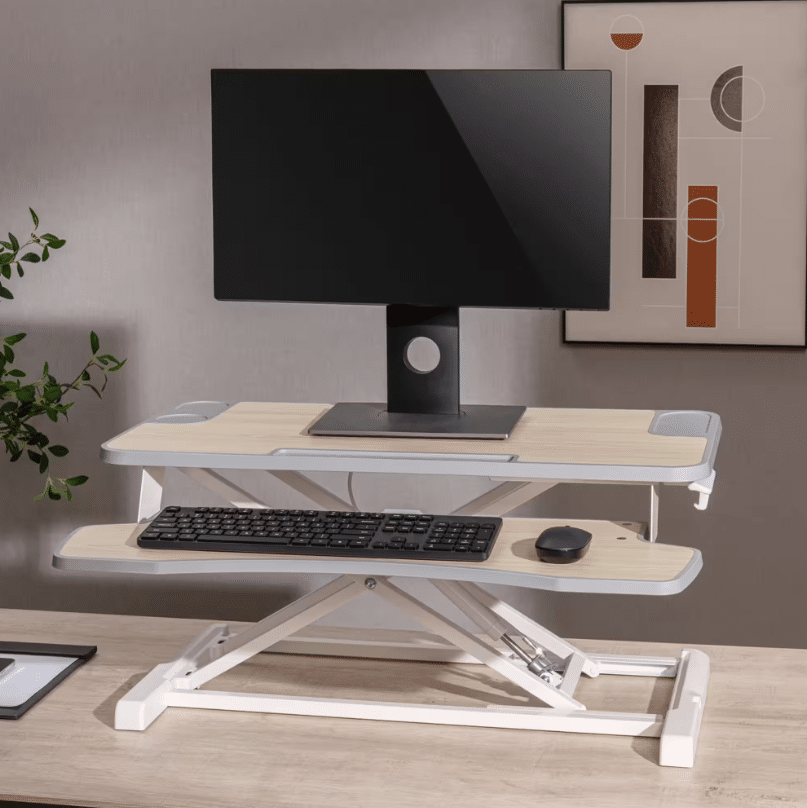
| Extras | Cable, cup & headset holders | Overheat protection, LED display | Keyboard shelf |
| Best for | Full workstation, heavy setup | Everyday office use | Compact / desktop converter |
| Shop now | Shop now | Shop now |
Choosing the right standing desk is a bigger deal than it might seem. Get it right, and it can transform how you work day to day. Take the time to match the specs to your actual needs, and if you can, try a few models in person before committing.
FAQ
Is it hard to put together?
Most models ship with a step-by-step guide and all the tools you need. Budget around 30–60 minutes for assembly
What if I’m very tall?
A range up to 130 cm covers most people up to around 6’7″ (2 m). If you’re on the taller side, a wider desktop (160 cm+) will also help with comfort.
Will it wobble when I’m standing?
Dual and triple motor models are built to stay solid, even with multiple screens loaded on top.
Can it remember my preferred heights?
All three models here support memory presets — up to 8 saved positions.