
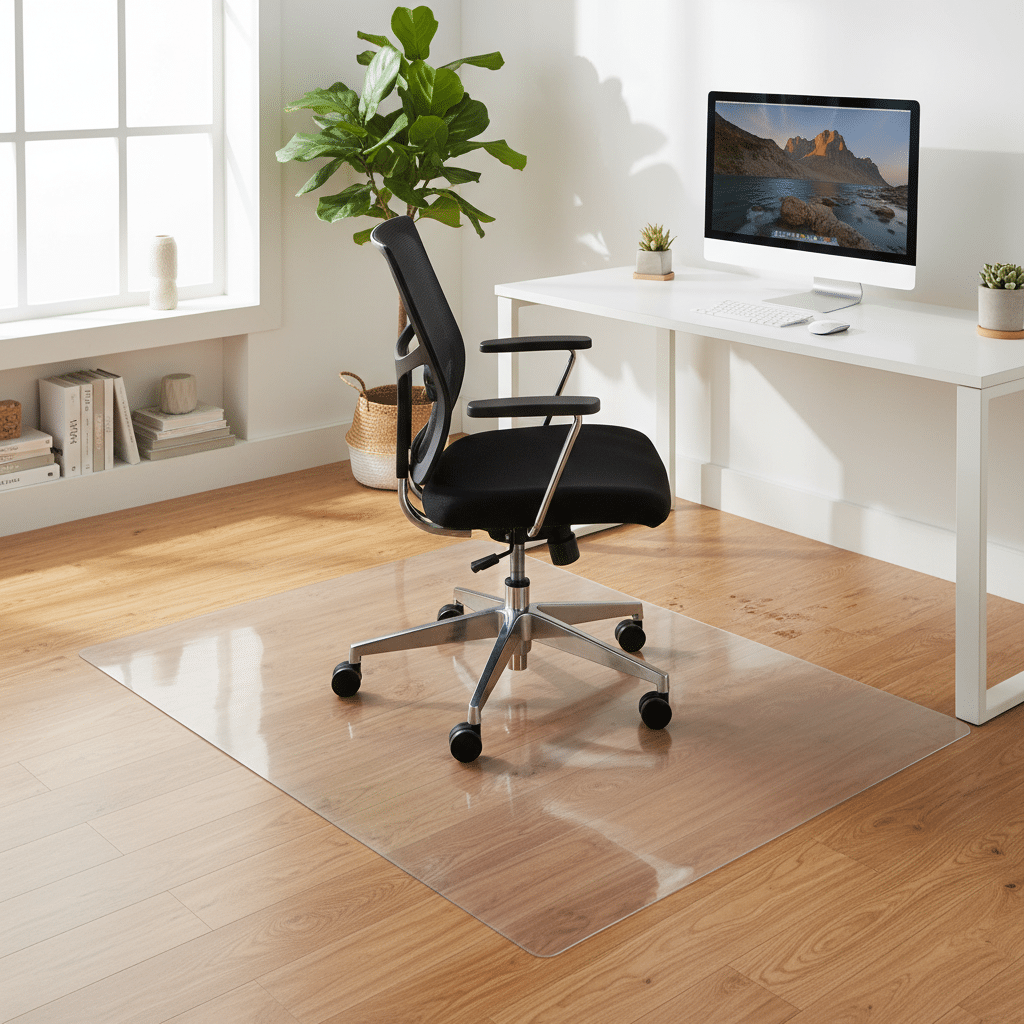

Choosing the right chair mat for your office can be a daunting task. Many buyers often end up with a mat that doesn’t meet their needs, leading to wasted money and frustration. This guide aims to help you make an informed decision, ensuring you select the perfect mat for your floor type, whether it’s carpet or hard floor. Understanding the differences in material, size, and shape can prevent a bad purchase and enhance your workspace ergonomically.
Read on to discover the key considerations for selecting a chair mat that offers both floor protection and improved chair mobility, ultimately contributing to a more comfortable and productive work environment.
What Should You Consider When Buying a Chair Mat?
When buying a chair mat, consider the type of flooring in your office. Mats for hard floors differ significantly from those designed for carpets. For more information, refer to our Chair mat buying guide. Additionally, the size and shape of the mat should fit your workspace layout.
Key Features to Look for in a Chair Mat
- Floor type compatibility: hard floor or carpet specific.
- Correct size and shape for your workspace.
- Material choice: PVC vs. polycarbonate.
- Appropriate thickness for carpeted areas.
- Lip vs. no-lip design based on desk setup.
- Durability and environmental impact.
- Grip and stability for safety.
- Mobility enhancement for ergonomic benefits.
Understanding the Difference: Hard Floor vs. Carpet Mats
The primary distinction between hard floor and carpet chair mats is their design and material. Hard floor mats are typically smooth on the bottom to prevent slipping, while carpet mats have spikes or grippers to anchor them in place. For more information on selecting the right type, refer to our Chair mat buying guide, as choosing the wrong type can result in decreased functionality and potential damage to your floors.
For hard floors, opt for a mat with a non-slip surface to keep it securely in place. For carpets, ensure the mat has enough grip to prevent movement. This decision will significantly impact the mat’s effectiveness in protecting your floors and enhancing chair mobility. For more information, check out our Chair Mat Buying Guide.
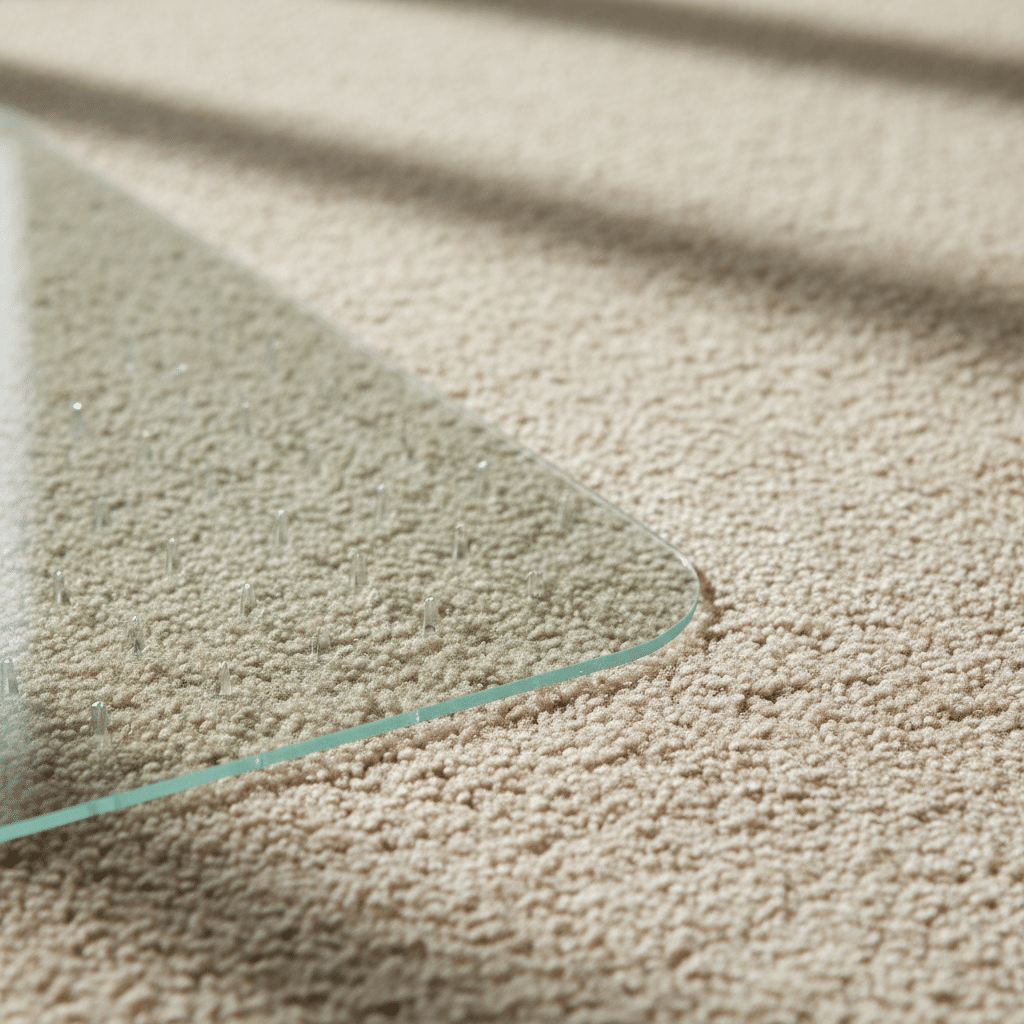

Viking Realspace Premium Chair Mat PC (Polycarbonate) Rectangular with Lip Transparent 120 x 90 cm Soft Floor

Viking Realspace Premium Chair Mat Polycarbonate Rectangular Transparent 116 x 150 cm Soft Floor

Viking Realspace Chair Mat Polymer Rectangular Transparent 120 x 90 cm Soft Floor

Viking Realspace Premium Chair Mat Polycarbonate Rectangular Transparent 120 x 90 cm Soft Floor

Viking Realspace Standard Chair Mat Polycarbonate Rectangular with Lip Transparent 120 x 90 cm Hard Floor
Getting the Right Size and Shape
Accurate measurements are crucial when selecting a chair mat. Measure the area where your chair will move to determine the appropriate size. For more information, refer to our Chair Mat Selection Guide. Consider the shape of your workspace; rectangular or lipped mats work well under desks, while circular mats suit open spaces.
A mat that’s too small won’t provide adequate protection or mobility, while one that’s too large may be cumbersome. Balance functionality with aesthetics by choosing a mat that fits well within your office layout.
Comparison Table of Chair Mats by Floor Type and Use Case
| Floor Type | Material | Use Case |
|---|---|---|
| Hard Floor | Polycarbonate | Durability and Eco-friendliness |
| Carpet | PVC | Cost-effectiveness |
| Hard Floor | PVC | Budget-friendly |
| Carpet | Polycarbonate | Heavy-duty use |
Material Matters: PVC vs. Polycarbonate
Chair mats are commonly made from PVC or polycarbonate. PVC mats are more affordable and flexible, making them suitable for light use on carpets. However, they may not last as long as polycarbonate mats, which are more durable and rigid.
Polycarbonate is an eco-friendly option that offers superior transparency and resistance to cracking. It’s ideal for heavy-duty use and provides excellent floor protection. Weigh the benefits of each material against your budget and usage requirements.
Conclusion
Choosing the right chair mat involves understanding your office floor type, measuring the space accurately, and selecting the appropriate material and thickness. By considering these factors, you can avoid common purchasing mistakes and invest in a mat that protects your floors and enhances chair mobility.
Remember, the right chair mat not only extends the life of your flooring but also contributes to a more ergonomic workspace, reducing strain and improving productivity. Explore our range of chair mats to find the perfect fit for your office needs.
Frequently Asked Questions
How do I know if I need a chair mat with a lip?
If your desk setup involves frequent foot movement or if you want to protect the floor area beneath your desk, a lipped mat is beneficial. It extends under the desk to offer additional protection. For open spaces, a no-lip mat provides a cleaner appearance.
Can I use a hard floor mat on a carpet?
Using a hard floor mat on a carpet is not recommended. Hard floor mats lack the grippers needed to stay in place on carpeted surfaces, potentially leading to movement and insufficient protection. Always choose a mat designed for your specific floor type.
What is the best material for a chair mat?
The best material depends on your needs. Polycarbonate is ideal for durability and eco-friendliness, especially for heavy-duty use. PVC is more budget-friendly and flexible, suitable for light to moderate use. Consider your budget and usage requirements before deciding.
How thick should a chair mat be for carpeted floors?
For carpeted floors, a thicker mat (around 3mm to 5mm) is advisable to prevent the chair from sinking and to protect the carpet fibers. The thickness ensures stability and smooth mobility, enhancing the ergonomic benefits of the chair mat.