


Mastering the Basics: How to Read a Tape Measure

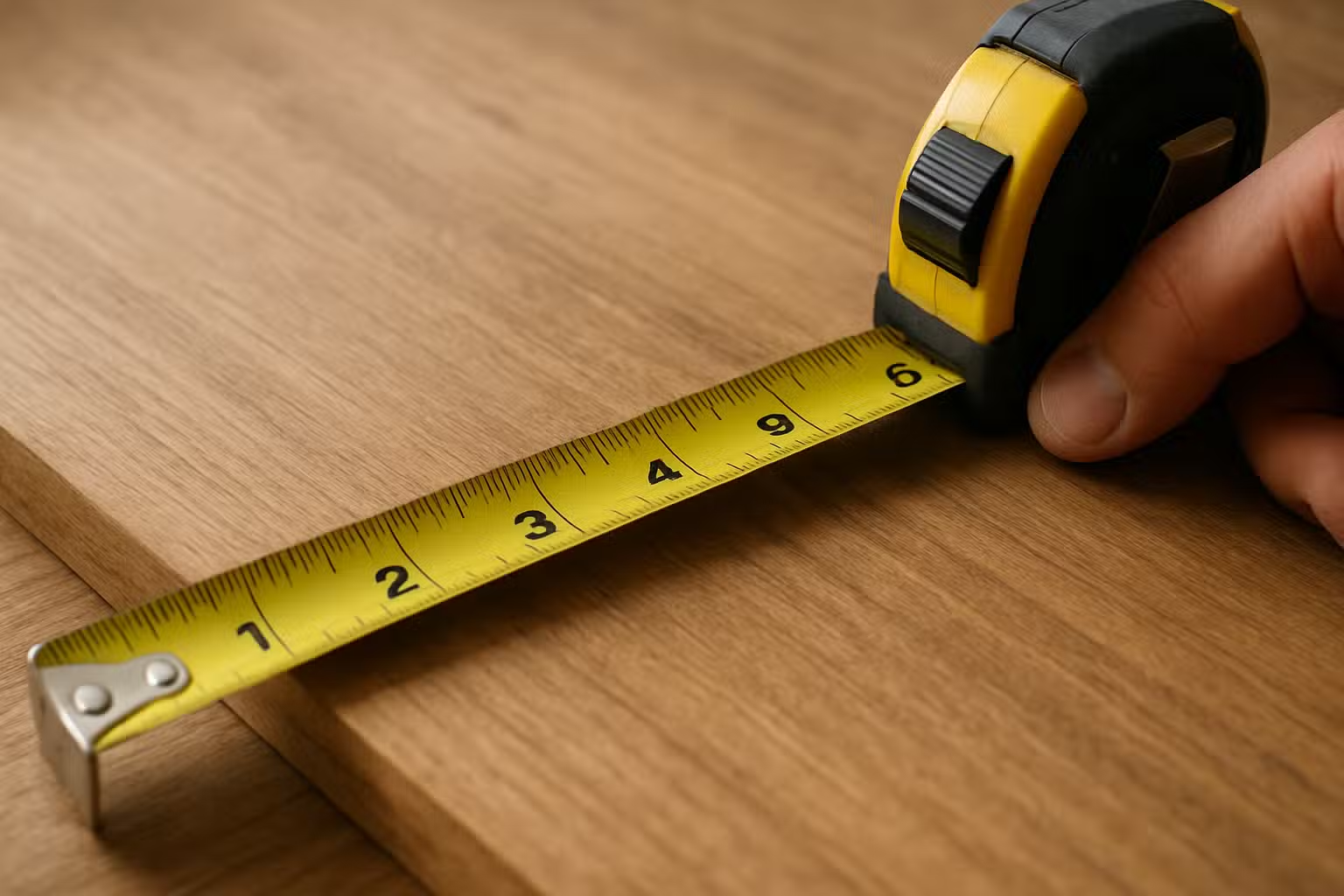
Accurately reading a tape measure is a fundamental skill for any DIY enthusiast or beginner looking to undertake home improvement projects in the UK. Whether you’re building furniture, installing shelves, measuring up for flooring, or checking whether a new appliance will fit, understanding how to read a tape measure helps you work more precisely and avoid expensive mistakes. In the UK, metric measurements (millimetres and centimetres) are the standard, but many tape measures also include inches—so it’s useful to understand both.
How Do You Quickly Read a Tape Measure?
Start by checking which scale you’re using. On most UK tape measures, the metric side shows centimetres (cm) as the numbered markings, with smaller lines for millimetres (mm). Each centimetre is split into 10 millimetres. Many tape measures also include inches on another edge, divided into fractions (like 1/2, 1/4, 1/8 and sometimes 1/16). For quick reference: 1 inch equals 2.54 cm (25.4 mm).
Essential Steps to Read a Tape Measure
- Extend the tape measure to the desired length.
- Decide whether you’re measuring in metric (mm/cm) or inches.
- Identify the nearest full centimetre mark (or inch mark).
- For metric: count the millimetre lines beyond the last full centimetre for an exact reading.
- For inches: locate the fraction line closest to your measurement (such as 1/2, 1/4, 1/8).
- Record the measurement accurately and double-check before cutting or fixing.
- Retract the tape measure carefully to prevent the blade from snapping back.
Understanding Tape Measure Markings
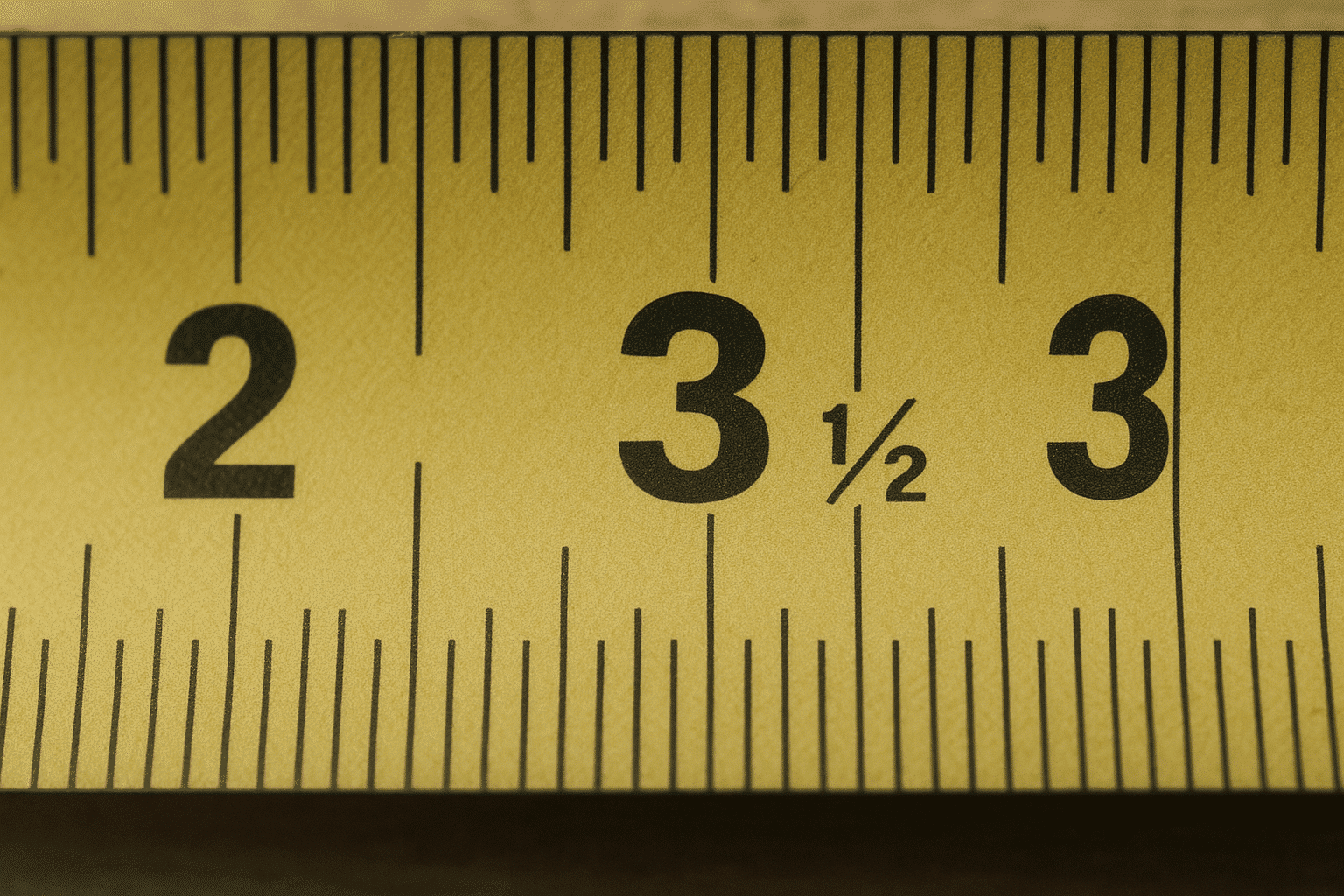
Tape measures are marked with a series of lines and numbers that indicate different measurements. In the UK, metric markings are most commonly used: the numbered marks represent centimetres, and the shorter lines between them indicate millimetres. Because millimetres avoid rounding, they’re ideal for precise DIY tasks such as carpentry, fitting shelves, or measuring for blinds.
Many tape measures also include imperial markings (inches). On the inch scale, the longest lines represent full inches, while shorter lines between them denote fractions of an inch. Typically, the second longest lines indicate 1/2-inch marks, followed by 1/4-inch and 1/8-inch lines, each progressively shorter. Some tape measures go down to 1/16-inch for extra precision. If you’re converting: 1 inch = 2.54 cm, and 1 foot (12 inches) = 30.48 cm. Familiarity with these lines is crucial for accurate readings, making Understanding Tape Measure Readings essential.
Most tape measures also include longer-distance markers to help you keep track. For imperial, foot markers are often highlighted (sometimes in red) every 12 inches. For metric, some tapes show half-metre and metre indicators more clearly. Understanding these markings will help you quickly and accurately measure any object, ensuring your projects are precise and professional.

Stanley Tylon Measuring Tape 3 m 30-686

Tylon Pocket Tapes 5m/16ft + 8m/26ft (Twin Pack)

Pocket Tape Measure Stanley Tylon 8M 26 FT wide 25MM LOOSE

Tape Measure Stanley Fatmax Bladeamor 10M 33 FT 32MM Wide

Viking Tape Measure 5m Non Magnetic Lockable
Practical Tips for Accurate Measurements
When measuring, ensure the tape measure is straight and not twisted, as this can lead to inaccurate readings. Use the hook at the tape’s end to secure it against the object being measured, providing stability and improving accuracy. The hook is designed to move slightly to compensate for its thickness—so don’t try to “fix” it in place, as that movement is what helps inside and outside measurements stay accurate.
For longer measurements, consider using a helper to hold the tape measure, preventing sagging or bending. If you’re measuring alone over a long distance, try hooking the end onto a corner or screw, or use masking tape to hold it in place temporarily. Always measure twice to confirm accuracy, especially before cutting materials. If possible, mark the measurement on the object with a pencil for easy reference. These practical tips will help you avoid common mistakes and ensure your measurements are reliable.
Common Measurements and Fractions
| Measurement | Equivalent |
|---|---|
| 10 mm | 1 cm |
| 25.4 mm | 1 inch |
| 304.8 mm | 1 foot (12 inches) |
| 1/2 inch | 12.7 mm |
| 1/4 inch | 6.35 mm |
| 1/8 inch | 3.175 mm |
| 3/4 inch | 19.05 mm |
| 7/8 inch | 22.225 mm |
Avoiding Common Measurement Mistakes
One common mistake is misreading the scale on a dual-marked tape measure. Many tapes show metric on one edge and inches on the other—so make sure you’re reading the correct side before writing anything down. Another mistake is rounding too early: for example, writing “85 cm” instead of “850 mm” can reduce accuracy when fitting or cutting.
Misreading imperial fractions is also a frequent issue. If you need inches, take a moment to identify whether you’re looking at 1/2, 1/4, 1/8 or 1/16 marks. A good habit is to say it out loud (for example, “12 inches and three eighths”) before recording it.
Additionally, ensure the tape measure is in good condition, as damaged or worn-out tapes can lead to inaccurate readings. Regularly check for kinks, bends, or fading marks, and confirm the end hook isn’t loose or bent out of shape. Replace your tape measure if necessary. By avoiding these pitfalls, you’ll enhance your measurement accuracy and project outcomes.
Wrapping Up: Key Takeaways
Reading a tape measure accurately is a vital skill for any DIY enthusiast in the UK. By understanding metric markings (millimetres and centimetres), recognising common imperial fractions, and using practical measuring techniques, you can ensure precise measurements for all your projects.
Remember: metric is usually the easiest and most precise option, especially when you write measurements in millimetres. But knowing the basics of inches—and how to convert them—can be handy for older plans, imported products, or certain tools and fittings.
Frequently Asked Questions
What do the numbers on a tape measure mean?
On most UK tape measures, the numbers commonly represent centimetres on the metric scale, with smaller lines between them indicating millimetres. Many tape measures also include inches on another edge, where numbers represent full inches and the smaller lines show fractions like 1/2, 1/4, 1/8 or 1/16.
How do I measure accurately with a tape measure?
To measure accurately, keep the tape straight, use the end hook to secure it, and confirm you’re reading from the correct scale (metric or imperial). For best precision, record measurements in millimetres and measure twice before cutting or fitting materials.
Why is my tape measure not accurate?
If your tape measure is not accurate, it could be due to wear and tear, such as a bent hook, kinked blade, or faded markings. Ensure your tape measure is in good condition and replace it if necessary. Also, make sure you’re reading the correct scale and not rounding too early.
Can I use a tape measure for metric measurements?
Yes, most tape measures sold in the UK include metric measurements (centimetres and millimetres), often alongside inches. Metric is the standard for modern UK DIY and construction work, and using millimetres can improve accuracy.