



Choosing the Right Filing Cabinet: How Many Drawers Do You Need?

When it comes to organizing an office, selecting the right filing cabinet is crucial for maintaining an efficient workspace. Office managers and small business owners must consider their storage needs carefully to ensure they choose a cabinet that optimizes space and organization. The number of drawers in a filing cabinet can significantly impact how well it serves your office’s needs.
How to Quickly Assess Your Filing Cabinet Drawer Needs?
To quickly determine how many drawers you need in a filing cabinet, start by evaluating the volume and type of documents you handle regularly. Consider the frequency of access and the need for categorization. A simple rule of thumb is to allocate one drawer for each major category of documents you manage.
Factors Affecting Filing Cabinet Drawer Choice
- Volume of documents
- Type of documents
- Available office space
- Frequency of access
- Organizational style
- Future growth potential
- Budget constraints
Understanding Your Office’s Document Volume
One of the first considerations when choosing a filing cabinet is the volume of documents your office handles. For offices with a high volume of paperwork, a cabinet with more drawers can help distribute the load and prevent overcrowding. On the other hand, a smaller office might find a cabinet with fewer drawers sufficient for their needs. When it comes to Choosing filing cabinets, it’s essential to assess your specific requirements.
It’s important to assess not just the current volume, but also anticipate future growth. A growing business might require additional storage space over time, making it wise to invest in a cabinet with extra capacity. This foresight can save time and money in the long run.
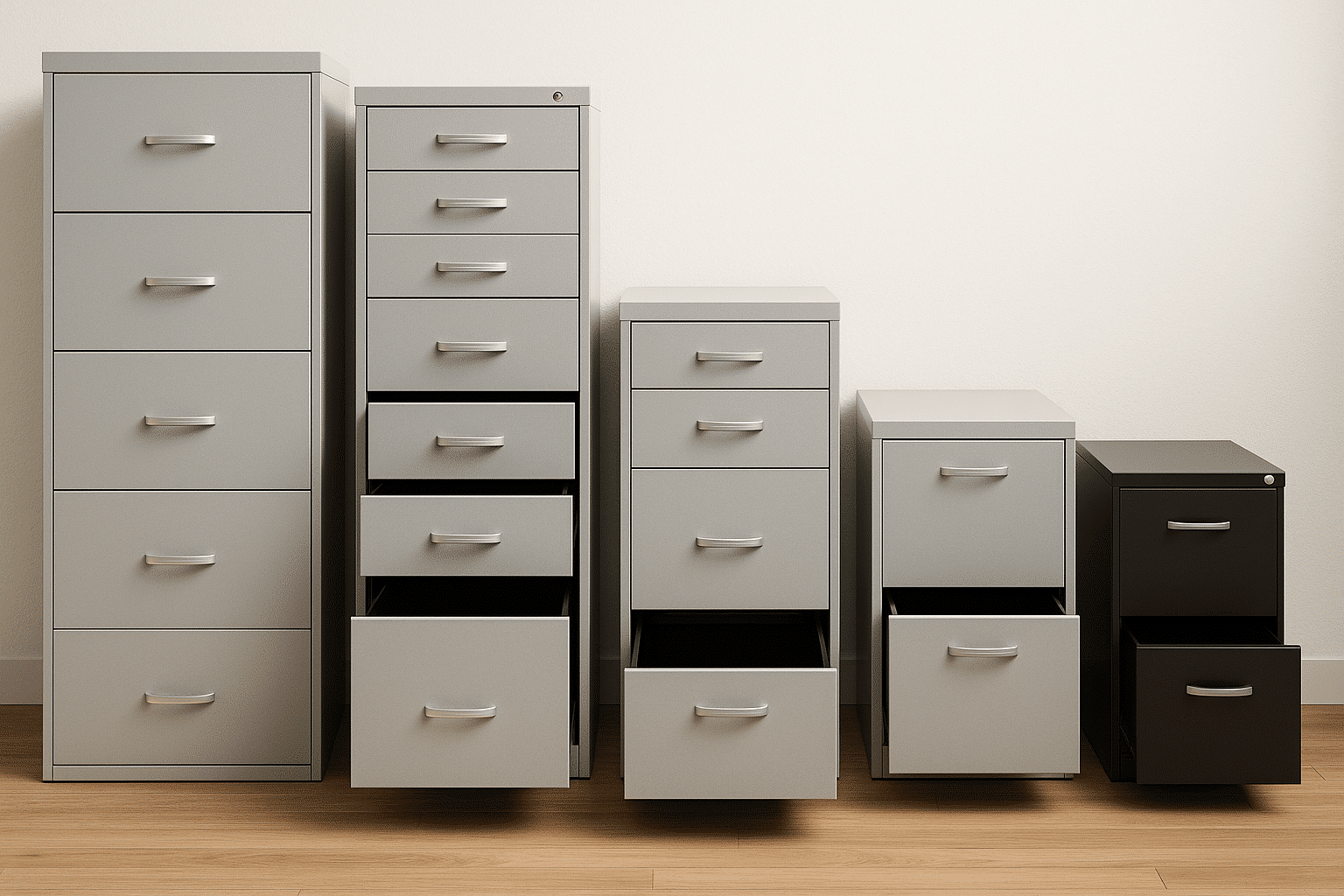

Pierre Henry Maxi Steel Filing Cabinet with 2 Lockable Drawers 400 x 400 x 660 mm Silver, White

Pierre Henry Maxi Steel Filing Cabinet with 2 Lockable Drawers 400 x 400 x 660 mm Black

Pierre Henry Maxi Steel Filing Cabinet with 2 Lockable Drawers 400 x 400 x 660 mm Grey

Pierre Henry Steel Filing Cabinet with 2 Lockable Drawers Maxi 400 x 400 x 660 mm White

Bisley Filing Cabinet 4 Drawers Lockable 470 x 622 x 1,312 mm Grey
Considering the Type of Documents
The type of documents you store can also influence the number of drawers you need. For instance, if your office deals with large-format documents like blueprints or artwork, a flat file cabinet with multiple shallow drawers might be more appropriate than a standard vertical or lateral cabinet.
Conversely, for standard letter or legal-size documents, a vertical or lateral cabinet will suffice. Consider whether your documents are sensitive and require secure storage, as this may also impact your choice, potentially necessitating a locking mechanism.
Comparison Table of Filing Cabinet Drawer Configurations
| Configuration | Number of Drawers | Best For |
|---|---|---|
| Vertical | 2-5 | Limited floor space |
| Lateral | 2-4 | Wider storage needs |
| Mobile | 2-3 | Flexible office layouts |
| Flat File | 5+ | Large documents |
Evaluating Available Office Space
Space constraints are a critical factor in determining the right filing cabinet. In a compact office, a vertical filing cabinet with multiple drawers can maximize storage without taking up much floor area. These cabinets are tall and narrow, making them ideal for tight spaces.
For offices with more room to spare, lateral filing cabinets offer wider drawers that can store more documents side by side, providing easier access and better organization. Consider the layout of your office and the flow of movement when selecting the size and type of cabinet.
Conclusion: Making the Right Choice
Selecting the right filing cabinet involves carefully considering your document volume, the type of documents you handle, and the available office space. By evaluating these factors, you can choose a cabinet that meets your current needs and accommodates future growth.
Remember, the goal is to enhance efficiency and organization within your workspace. Investing in the right filing cabinet can lead to a more streamlined and productive office environment.
Frequently Asked Questions
How do I determine the right size of filing cabinet for my office?
To determine the right size, assess the volume of documents you need to store and measure the available space in your office. Consider the type of documents and how frequently you access them. This will help you decide between vertical, lateral, or mobile configurations.
What is the difference between vertical and lateral filing cabinets?
Vertical filing cabinets are tall and narrow, making them ideal for small spaces. They typically have multiple drawers stacked on top of each other. Lateral filing cabinets are wider and allow for side-by-side document storage, providing easier access to files. They are suitable for offices with more floor space.
Can I use a filing cabinet for non-document storage?
Yes, filing cabinets can be versatile storage solutions. They can store various office supplies, equipment, and even personal items. However, ensure the cabinet’s weight capacity and drawer dimensions align with the items you plan to store to avoid damage or inefficiency.
Are there filing cabinets designed for specific document types?
Yes, certain filing cabinets are designed for specific document types. For example, flat file cabinets are ideal for large-format documents like maps or blueprints. Specialty cabinets may also be available for sensitive documents, offering additional security features such as locks.